



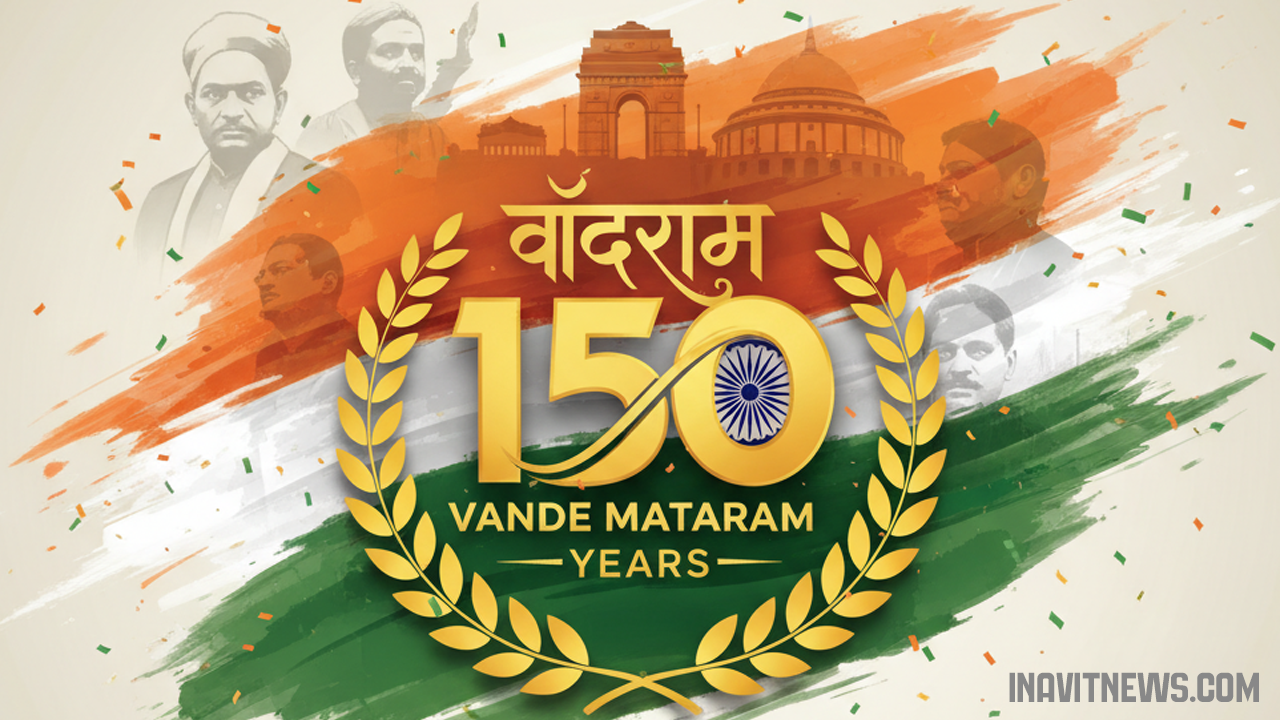
Introduction: 150 Years of Patriotic Pride
In 2025, India celebrates a historic milestone — 150 years of Vande Mataram, the song that stirred the hearts of millions during the struggle for independence. More than just a national song, Vande Mataram represents the undying devotion to the motherland — India. Written in 1875 by Bankim Chandra Chatterjee, this masterpiece became the soundtrack of patriotism, inspiring revolutionaries, poets, and freedom fighters alike. Full Form KYC: Know Your Customer Explained
Origin of Vande Mataram: A Poem that Awakened a Nation
The Creation in Anandamath
The story of Vande Mataram begins in 1875, when Bankim Chandra Chatterjee penned it in his Bengali novel Anandamath (published in 1882). The novel, set against the backdrop of the Sannyasi Rebellion, depicted monks rising against British rule — guided by their love for the motherland. Within its pages, Vande Mataram emerged as a divine hymn celebrating Bharat Mata (Mother India).
The Meaning Behind the Words
“Vande Mataram” translates to “I bow to thee, Mother.” The poem praises India’s beauty — its rivers, fields, and mountains — and portrays the country as a nurturing mother. It symbolizes spiritual nationalism, uniting devotion with patriotism.
From Poem to National Song: The Journey of Vande Mataram
The Role in India’s Freedom Struggle
By the early 1900s, Vande Mataram had become the rallying cry of India’s independence movement. During protests against the Partition of Bengal (1905), the chant echoed through streets, uniting people across regions and religions. Leaders like Bal Gangadhar Tilak, Lala Lajpat Rai, and Aurobindo Ghosh championed its use as a symbol of resistance and unity.
Adoption as the National Song in 1950
After independence, the Constituent Assembly of India adopted Vande Mataram as the national song on January 24, 1950, alongside Jana Gana Mana, the national anthem. The first two stanzas of Bankim’s original poem were officially recognized, honoring its secular and patriotic message.
More Read

Musical Legacy: Compositions and Renditions Over the Years
Rabindranath Tagore’s Rendition in 1896
The song’s first public performance was in 1896 at the Indian National Congress session in Calcutta, sung by none other than Rabindranath Tagore. His soulful rendition gave Vande Mataram its musical wings, transforming it from a literary masterpiece into an anthem of hope.
Modern Renditions and Celebrations
Over time, artists such as Lata Mangeshkar, A.R. Rahman, and Hemant Kumar have given Vande Mataram modern interpretations. A.R. Rahman’s 1997 version, released during India’s 50th Independence anniversary, reintroduced the song to a new generation, blending traditional and contemporary styles.
Cultural and Emotional Impact of Vande Mataram
Symbol of Motherland Devotion
Even after 150 years, Vande Mataram continues to embody the love and reverence Indians hold for their country. It reminds citizens that patriotism is not just about independence—it’s about unity, progress, and respect for the land that sustains us.
Presence in Modern India’s Public Life
From morning assemblies in schools to Republic Day celebrations, Vande Mataram remains a living tradition. In the digital era, it has found new life through social media tributes, remixes, and educational programs promoting national pride.
Commemorating 150 Years in 2025
Events and Programs Across India
To mark 150 years of Vande Mataram, several cultural programs, musical tributes, and academic seminars are being organized nationwide. The Indian government and cultural bodies have planned exhibitions, documentaries, and live performances celebrating Bankim Chandra’s legacy.
Message of Unity in Diversity
The song’s timeless message — “Unity through devotion to the motherland” — is more relevant than ever. As India stands tall as a global power, Vande Mataram continues to remind every citizen of their shared identity and purpose. What is the Top 10 Biggest Countries in the World?
Q1. Who wrote Vande Mataram and when?
Q2. Why is Vande Mataram significant in India’s history?
Q3. When was Vande Mataram adopted as the national song?
Q4. What does Vande Mataram mean?
Q5. Who first sang Vande Mataram publicly?
Q6. How is India celebrating 150 years of Vande Mataram?
Conclusion: The Eternal Echo of Vande Mataram
As India commemorates 150 years of Vande Mataram, we celebrate not only a song but a symbol — a melody that carried the heartbeat of a nation from colonial bondage to sovereign pride. Its words continue to inspire unity, courage, and devotion. Indeed, Vande Mataram will forever echo in the soul of India — an anthem of the past, present, and future.For more on the history and lyrics of Vande Mataram, visit the Government of India’s Ministry of Culture page.