


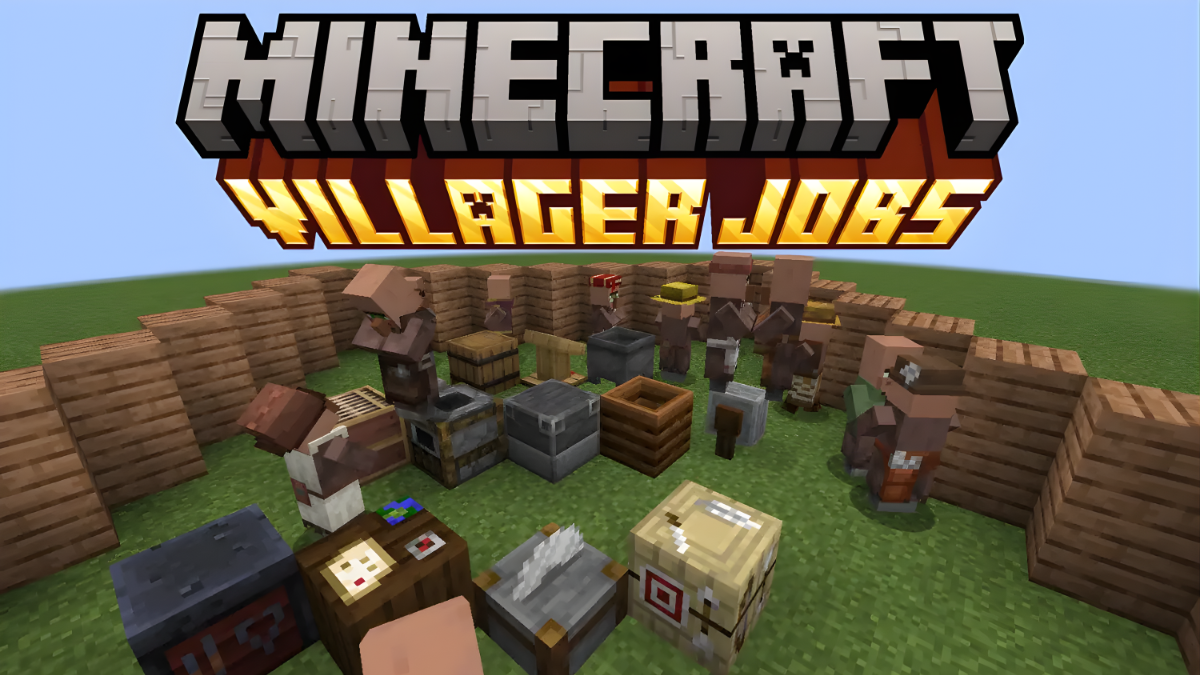
Minecraft isn’t just about mining and crafting; villagers add life and economy to the game. Every villager in Minecraft has a profession, job site, and trading skill that helps you progress efficiently. In this guide, you’ll learn all Minecraft villager jobs explained, including how to assign jobs, what each profession does, and how to trade smarter.
- What Are Villager Jobs in Minecraft?
- Types of Villagers in Minecraft
- Unemployed and Nitwit Villagers
- How to Assign Jobs to Villagers
- Best Villager Jobs for Trading Emeralds
- Villager Leveling System
- How to Change a Villager’s Job
- Efficient Villager Trading Hall Setup
- Popular Villager Combinations
- Trading Villagers in Minecraft Java vs Bedrock
- Tips for Advanced Villager Management
- Common Mistakes Players Make
- FAQs About Minecraft Villager Jobs
- Internal Linking Suggestions
- Conclusion
What Are Villager Jobs in Minecraft?
Villagers are intelligent NPCs who work, trade, and live in villages. Each villager in Minecraft can take up a profession based on the workstation block placed nearby. Their job influences what items they trade and how they look.
There are 13 villager professions plus the jobless ones (Nitwit and Unemployed). Knowing each one helps players build trading halls and earn emeralds faster.
Types of Villagers in Minecraft
Here’s a breakdown of all types of villagers in Minecraft, their workstations, and what they offer in trades.

| Villager Profession | Workstation | Common Trades | Uses |
|---|---|---|---|
| Armorer | Blast Furnace | Armor pieces | Best for diamond armor |
| Butcher | Smoker | Cooked meat, emeralds | Easy emerald farming |
| Cartographer | Cartography Table | Maps, banners | Useful for map exploration |
| Cleric | Brewing Stand | Redstone, ender pearls | Great for magical items |
| Farmer | Composter | Food, wheat, carrots | Best for renewable trades |
| Fisherman | Barrel | Fish, boats | Quick emeralds early game |
| Fletcher | Fletching Table | Arrows, bows | Ideal for bow users |
| Leatherworker | Cauldron | Leather armor, saddles | For early armor crafting |
| Librarian | Lectern | Enchanted books, name tags | Highly valuable for enchantments |
| Mason (Stone Mason) | Stonecutter | Stone bricks, quartz | Great for builders |
| Shepherd | Loom | Wool, dyes | Decorative crafting |
| Toolsmith | Smithing Table | Tools | Get diamond tools easily |
| Weaponsmith | Grindstone | Swords, axes | Perfect for combat gear |
Unemployed and Nitwit Villagers
Not every villager works. Two types stand out:
- Unemployed Villagers: They can take a job if a workstation is placed nearby.
- Nitwit Villagers: They never get jobs, no matter what workstation you place.
When you see a nitwit, avoid wasting resources—focus on giving jobs to the workable villagers.
How to Assign Jobs to Villagers
Assigning jobs to villagers in Minecraft is simple:
- Locate or breed a villager.
- Place a workstation block (like a lectern for a librarian) close to them.
- The villager will walk to it and take the profession.
- Lock their trade by buying or selling an item once.
If you break their workstation after locking in trades, they won’t lose their profession. This is especially useful when setting up trading halls.

Best Villager Jobs for Trading Emeralds
Some villager professions are better for emerald farming than others. Here are the top emerald-earning jobs in Minecraft:
- Farmer: Trades food items that are easily renewable.
- Fletcher: Trades sticks for emeralds — simple and fast.
- Cleric: Trades Rotten Flesh for emeralds — ideal if you farm mobs.
- Librarian: Trades enchanted books, which you can sell back or use for gear.
- Toolsmith: Perfect for upgrading tools and earning emeralds through gear trades.
Building a trading system around these jobs helps create a sustainable emerald economy in your world.
Villager Leveling System
Villagers level up as you trade with them:
- Novice → Apprentice → Journeyman → Expert → Master
Each level unlocks new trade items and better deals. The visual clue? Their badge color changes, and more trades get added to their list. A maxed-out master villager often provides exclusive or enchanted items.
How to Change a Villager’s Job
A villager can change jobs if:
- You break their existing workstation.
- They aren’t locked into trades (you haven’t traded with them yet).
- You place a new workstation nearby.
For example, if a villager is a butcher, break the smoker and place a lectern — the villager becomes a librarian. This is handy when optimizing your village setup.
Efficient Villager Trading Hall Setup
To create a Minecraft villager trading hall, follow these steps:
- Find or breed villagers in a secure area.
- Place job-specific workstations spaced evenly.
- Use beds and enclosures to prevent wandering.
- Assign key professions (Librarian, Farmer, etc.).
- Farm renewable items for trades like wheat, paper, or sticks.
- Trade daily and level up villagers strategically.
A well-organized trading hall ensures constant emerald flow and item supply.
Popular Villager Combinations
For balanced gameplay, here are smart combinations:
- Farmer + Fletcher: Emerald farming combo.
- Librarian + Toolsmith: Gear and enchant setup.
- Cleric + Weaponsmith: Ideal for nether and combat prep.
Assigning these pairs close together saves time during trades and farming.
Trading Villagers in Minecraft Java vs Bedrock
While the core idea of villager jobs remains the same, small differences exist between Java Edition and Bedrock Edition:
- In Bedrock, villagers restock more slowly.
- Pathfinding (movement toward workstations) can vary.
- Some trade rates differ slightly between editions.
Always test trading setups on your Minecraft version for best efficiency.
Tips for Advanced Villager Management
- Name your key villagers to avoid despawning.
- Use lanterns and fences to keep work zones bright and safe.
- Breed villagers using bread or carrots to expand your workforce.
- Use discounts from curing zombie villagers for better trade deals.
- Protect your village with iron golems or walls to stop raids.
Common Mistakes Players Make
- Forgetting to lock trades after assigning jobs.
- Leaving nitwits in the system, wasting workstation space.
- Not providing enough beds — villagers won’t breed or rest.
- Ignoring workstation placement, leading to pathfinding issues.
Avoid these pitfalls to make villager management smoother.
FAQs About Minecraft Villager Jobs
Villagers claim the nearest available workstation block, such as a lectern or blast furnace. Once claimed, they adopt the related profession.
Yes, if their workstation is broken and they haven’t traded yet. After trading, their job is locked permanently.
Librarians offer the most valuable trades with enchanted books like Mending and Unbreaking.
You can breed villagers by giving them bread, carrots, or potatoes, provided they have beds.
Common reasons include an occupied workstation, missing bed, or being a nitwit.
Internal Linking Suggestions
Add links to related posts from inavitnews.com:
- How to Breed Villagers in Minecraft
- Top 10 Minecraft Trading Tips to Earn Emeralds Fast
- Minecraft Enchantment Guide for Beginners
- Best Minecraft Starter Survival Tips 2025
Conclusion
Understanding all Minecraft villager jobs makes your gameplay easier and more rewarding. Whether you aim to build a massive trading hall or just want better armor, villagers are the heart of a successful world. By using smart workstation placement and trading strategies, you can turn any village into a thriving marketplace filled with emeralds, resources, and adventure.