

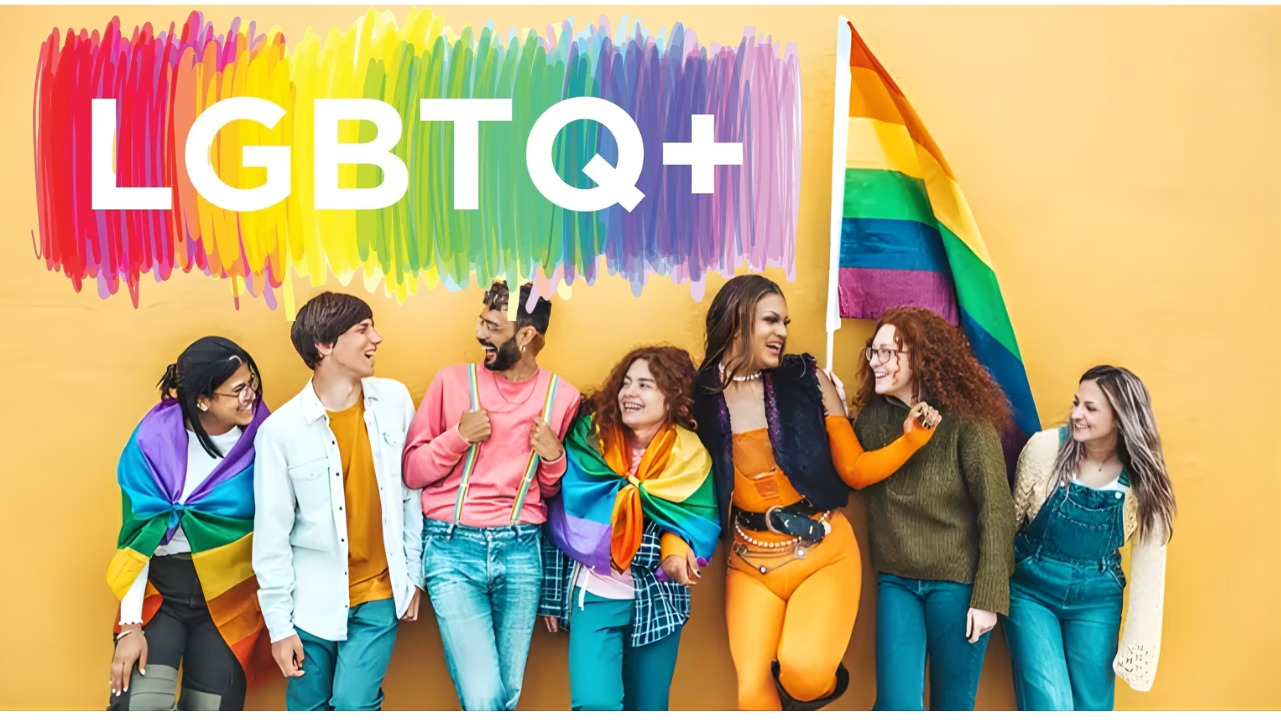
LGBTQ stands for Lesbian, Gay, Bisexual, Transgender, and Queer/Questioning, an umbrella term for people with diverse sexual orientations and gender identities, with the ‘Q’ often representing those exploring their identity or identifying as queer, and sometimes plus signs (+), ‘I’ (Intersex), and ‘A’ (Asexual/Aromantic) are added for more inclusion (LGBTQIA+).
Here’s a breakdown of the letters:
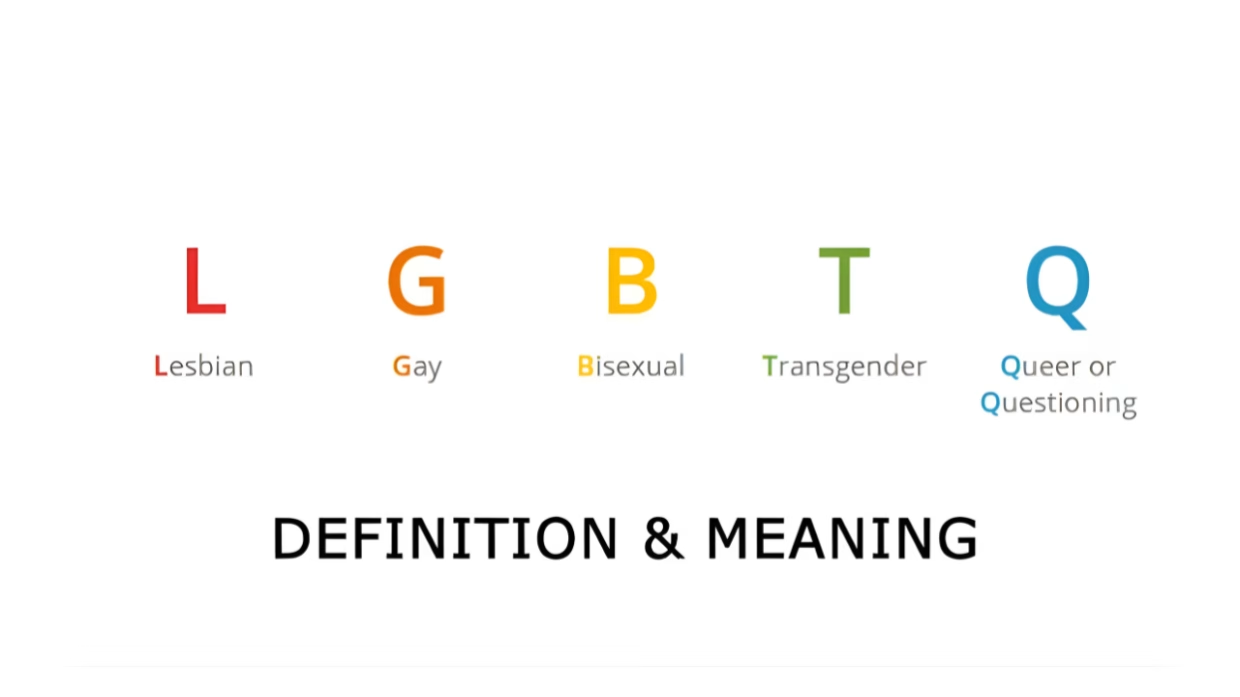
- Lesbian: A woman attracted to other women.
- Gay: A person, often a man, attracted to people of the same gender.
- Bisexual: Attracted to more than one gender (e.g., men and women).
- Transgender: A person whose gender identity differs from the sex they were assigned at birth.
- Queer/Questioning: “Queer” is a broad term for non-heterosexual/non-cisgender people; “Questioning” refers to individuals exploring their sexual orientation or gender identity.
LGBTQ Full Form Breakdown
The full form of LGBTQ expands to Lesbian, Gay, Bisexual, Transgender, Queer. Each letter represents a key aspect of sexual orientation or gender identity. Lesbian refers to women attracted to women, while Gay typically means men attracted to men.
Bisexual describes attraction to more than one gender, and Transgender indicates a gender identity different from the sex assigned at birth. Queer serves as an umbrella term for non-heteronormative identities, often embracing fluidity.
This structure evolved to be more inclusive, sometimes extended as LGBTQ+ to cover others like Intersex or Asexual.
LGBTQ Meaning and Significance
LGBTQ meaning goes beyond letters—it’s about shared culture, pride, and resistance to prejudice. Communities unite through events like Pride parades, celebrating diversity and individuality.
More Read
The term counters heterosexism and phobias like homophobia or transphobia, building solidarity among members facing discrimination. Sociologists view it as a vital social movement for equality.
In modern contexts, LGBTQ significance includes global advocacy for rights, visibility in media, and legal wins like marriage equality in many countries.
Read also : TDS Full Form: Tax Deducted at Source Explained
History of LGBTQ Community
The LGBTQ community traces roots to early 20th-century activism, gaining momentum post-1969 Stonewall Riots. This event sparked modern pride movements worldwide.
By the 1990s, the acronym expanded from LGB to include Transgender and Queer, reflecting broader identities. Today, it symbolizes resilience against historical oppression like the Lavender Scare.
Key figures shaped its growth, from activists to cultural icons, emphasizing empathy and shared experiences of marginalization.
Read also: Full Form of PhD: Doctor of Philosophy Explained
What Does LGBTQ Stand For?
LGBTQ stands for a spectrum of identities united by common challenges and celebrations. “Lesbian” and “Gay” focus on same-sex attraction, while “Bisexual” covers multiple genders.
“Transgender” highlights gender dysphoria resolution, separate from orientation—trans people can be straight, gay, or otherwise. “Queer” rejects rigid labels, often for fluid or non-binary folks.
Questioning individuals exploring identities also fit under this banner, promoting safe spaces for self-discovery.
Queer Meaning in LGBTQ
Queer meaning has shifted from a slur to a reclaimed, empowering term. It encompasses anyone outside heterosexual, cisgender norms, favoring fluidity over binaries.
In LGBTQ contexts, Queer fosters inclusivity for pansexual, non-binary, or undefined identities. It’s interchangeable with the full acronym but emphasizes anti-conformist vibes.
This evolution aids younger generations embracing intersectional experiences.
Read also :Locked Codes Roblox Guide: LOCKED, Lock Game & Blue Lock
Transgender Definition Explained
Transgender definition: someone whose internal gender differs from birth-assigned sex. It involves no specific orientation—trans women attracted to men might identify as straight.
Transitioning can include social changes, hormones, or surgery, but not always. Respecting pronouns builds trust within and beyond the community.
Authoritative sources stress education reduces transphobia, key to LGBTQ+ progress.
Read also: Roblox Archived Codes
LGBTQ Community Support
LGBTQ community thrives on allyship—non-LGBTQ people advocating equality. Allies listen, educate, and challenge biases for real change.
Pride events, online forums, and organizations like GlobalGiving amplify voices globally. Empathy from shared prejudice histories strengthens bonds.
Supporting involves staying informed on issues like discrimination, boosting trustworthiness in advocacy.
conclusion
Understanding the full form of LGBTQ—Lesbian, Gay, Bisexual, Transgender, Queer—highlights a vital movement for inclusivity and equality.
FAQ for Full Form of LGBTQ: Meaning & Explained
The full form of LGBTQ is Lesbian, Gay, Bisexual, Transgender, Queer. It represents diverse sexual and gender identities promoting inclusivity.
LGBTQ stands for Lesbian (women loving women), Gay (men loving men), Bisexual (multiple genders), Transgender (gender mismatch), Queer (fluid identities). Extensions like + include more.
The term evolved from “gay” in the 1970s, expanding post-Stonewall to today’s form by the 1990s for broader representation.
Queer acts as an umbrella like LGBTQ, but emphasizes fluidity and rejects strict categories, reclaimed from past negativity.
Be an ally by listening, using correct pronouns, supporting Pride, and challenging discrimination—key for equality.